The name Cyrus Jirongo has suddenly returned to Kenya’s political conversation, eight months after his death.
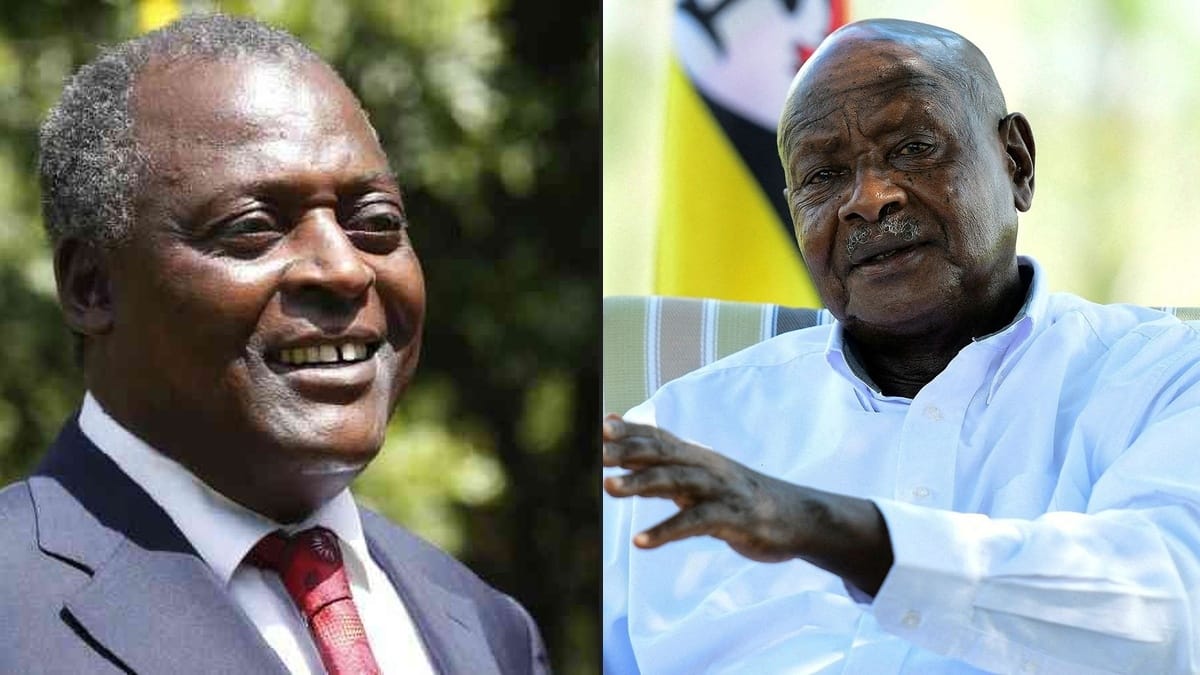
The late former Lugari MP is back in the headlines after Ugandan President Yoweri Museveni revealed that Jirongo was the Kenyan politician who alerted him in 2019 to Uganda’s use of middlemen in petroleum procurement.
Days later, Museveni said he had only recently learnt that Jirongo had died in a road crash in December 2025.
That coincidence has generated fresh public questions. But the available evidence does not establish a link between Jirongo’s death and the fuel controversy.
What it does show is that a political conversation about petroleum procurement has unexpectedly reopened interest in the final chapter of a veteran Kenyan politician’s life.
Museveni names Jirongo
Museveni disclosed this while explaining Uganda’s decision to change how it sourced petroleum products.
In a statement published on September 20, the Ugandan president said Jirongo had told him around 2019 that Uganda was buying petroleum products through middlemen in Kenya.
“It was a Kenyan Senator called Jirongo who told me this around 2019,” Museveni said, adding that he tasked then Energy Minister Irene Muloni to address the matter.
There is an important factual correction here: Jirongo was not a senator. He was a former Lugari MP and Cabinet minister. Museveni referred to him as a senator in his statement.
Museveni said the procurement system eventually changed in 2023, when Uganda entered an arrangement involving bulk supplier Vitol.
He provided figures showing the prices Uganda says it paid under the old and new arrangements. For diesel, Museveni cited a reduction from $118 to $83 per metric tonne; petrol fell from $97.50 to $61.50, while aviation fuel declined from $114.25 to $79.25.
Those are Museveni’s figures and accounts and should not automatically be treated as an independent audit of the previous arrangement.
Then came the death
The timing has become the most striking part of the story.
Jirongo died on December 13, 2025, after a road crash at Karai along the Nairobi-Nakuru highway.
On September 21, 2026, Museveni said he had only just learnt of the death.
“I have just learnt that Senator Cyrus Jirongo passed away last December in a motor accident. I was not aware that he had died,” Museveni said.
He then described Jirongo as “a good and patriotic leader who served his country with dedication”.
That statement has inevitably prompted questions because Museveni’s comments about Jirongo’s role in Uganda’s fuel procurement came immediately before the condolence message.
But chronology is not causation.
The Directorate of Criminal Investigations (DCI) previously said its preliminary findings indicated that Jirongo’s death was a road traffic accident, with no evidence at that stage pointing to foul play. Investigators examined the crash scene, CCTV footage and witness accounts as part of the probe.
There is therefore no established evidence in the public record connecting Jirongo’s death to the fuel issue.
The fuel question remains
The bigger policy question concerns what actually happened in petroleum procurement, and whether Kenyans can independently verify the competing accounts.
Museveni’s disclosure concerns Uganda’s earlier procurement arrangements, dating back to 2019. Kenya’s current Government-to-Government petroleum arrangement came later, in 2023.
That distinction is crucial.
Kenya’s Energy Cabinet Secretary Opiyo Wandayi has rejected claims of irregularities, saying the 2023 arrangement was designed to address foreign-exchange and liquidity pressures and involved international oil companies supplying petroleum products on extended credit terms. The government has also identified Kenyan companies appointed to handle local logistics and supply.
The government therefore disputes the suggestion that Museveni’s account automatically exposes wrongdoing in Kenya’s present G-to-G system.
Yet scrutiny is growing.
Kisii Senator Richard Onyonka has called on the parliamentary energy committees to examine the arrangement and explain to Kenyans how the system works and what the country pays for imported fuel.
That is where the debate should now move: from personalities and speculation to contracts, pricing, margins, intermediaries and procurement records.
Questions, not conclusions
Jirongo’s reappearance in the fuel debate raises legitimate questions, but it does not provide evidence for conclusions about his death.
Four separate issues need to remain distinct: what Jirongo told Museveni in 2019; how Uganda subsequently changed its fuel procurement; how Kenya’s 2023 G-to-G system operates; and what investigators established about Jirongo’s fatal crash.
Museveni’s remarks have added a new piece to that picture. They have also exposed how much public interest can be generated when an old political episode suddenly intersects with a prominent death.
For Kenya, the most consequential issue may ultimately be the least dramatic one: can the governments involved provide enough documentary evidence for the public to understand exactly how the fuel deals worked, who was paid, at what price and under what contractual terms?
Those are questions that can be answered through records, audits and parliamentary scrutiny.
They should not be answered through speculation.