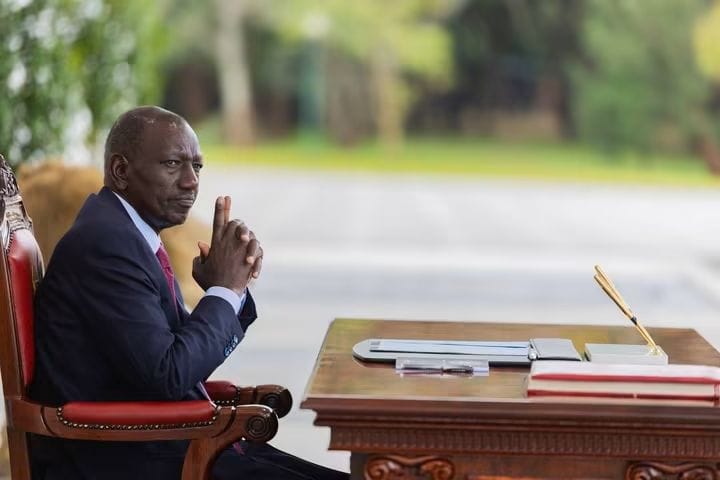
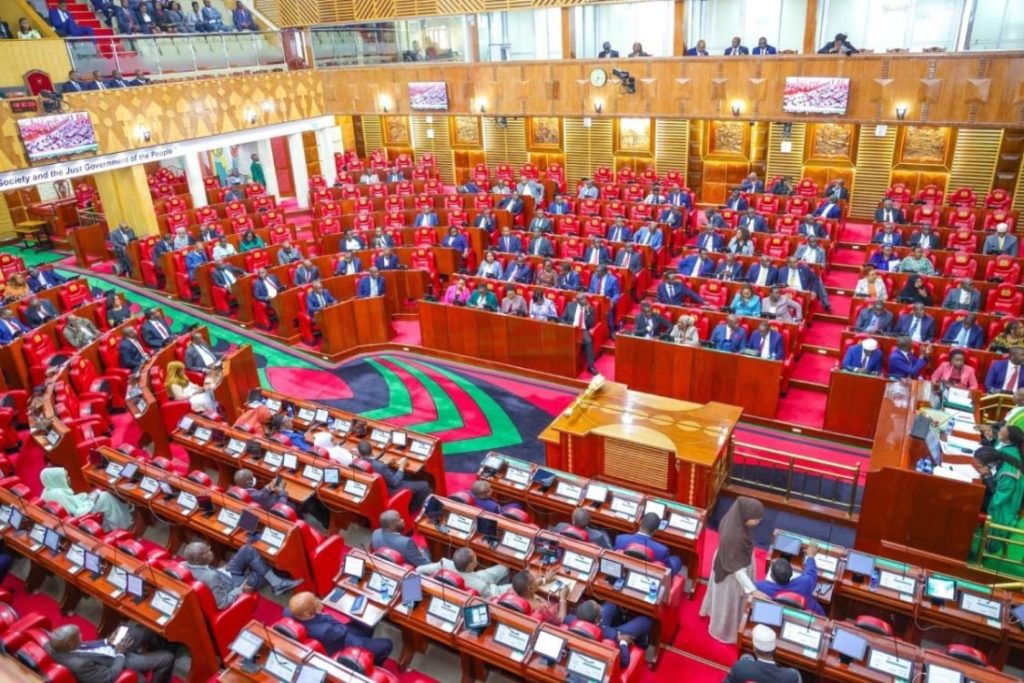
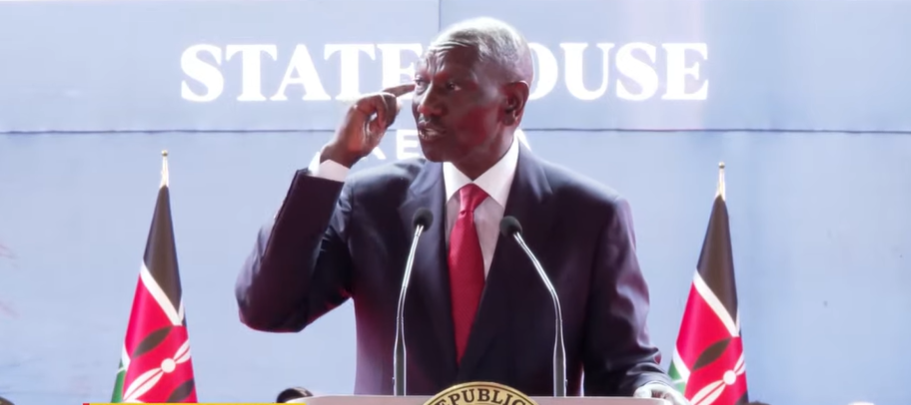
President William Ruto faces a difficult economic test as he prepares to address Parliament on Wednesday, November 18. A new report by Parliament’s Budget Office raises questions about whether Kenya’s economic transformation is delivering the jobs, productivity and investment gains promised by the administration.
The report, Budget Options for FY2027/28 and the Medium Term, does not dismiss the economy’s resilience. But it warns that growth has not accelerated, fiscal space is limited and raising investment and productivity remains a central challenge.
Its findings provide an important backdrop to the President’s address, which offers an opportunity to explain how the Government intends to turn its economic agenda into measurable improvements in household incomes, employment and public services.
The PBO is a non-partisan professional office that provides Parliament with budget, financial and economic analysis. Its findings are therefore not an opposition assessment, but a technical warning that deserves answers from the Government.
Debt eats into budget
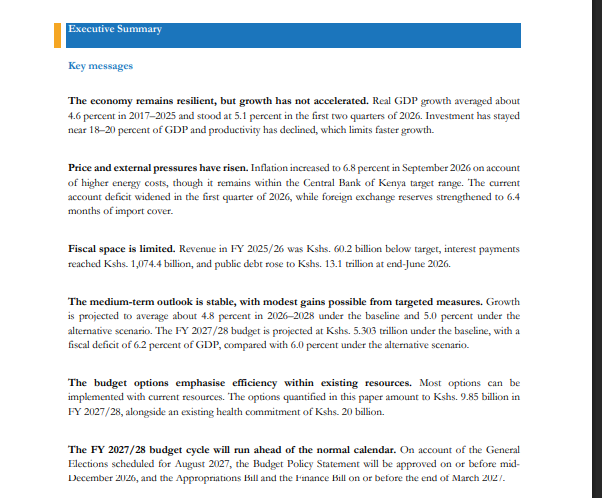
Kenya’s public debt reached Ksh13.1 trillion at the end of June 2026, according to the report. The cost of servicing that debt is becoming an increasingly significant constraint on the national budget.
Interest payments reached Ksh1,074.4 billion in FY2025/26, while revenue collection fell Ksh60.2 billion below target. The PBO projects interest payments could rise to Ksh1,457.4 billion in FY2027/28.
That projection matters because money spent paying interest cannot simultaneously finance roads, hospitals, schools, water projects or other public services.
The pressure is visible in the wider fiscal outlook. The PBO projects a Ksh5.303 trillion budget for FY2027/28, with a fiscal deficit equivalent to 6.2 per cent of gross domestic product under its baseline scenario.
The report’s message is blunt: fiscal space is limited. The Government must therefore explain how it will finance its priorities without increasing debt pressure or squeezing essential services.
This is a critical test for Ruto, whose administration has presented infrastructure, affordable housing, healthcare and economic transformation as central pillars of its development agenda.
Jobs and productivity
Economic growth has not translated into sufficiently strong labour-market outcomes. The PBO says real GDP growth averaged about 4.6 per cent between 2017 and 2025, while its baseline forecast puts average growth at about 4.8 per cent between 2026 and 2028.
That is a modest improvement, not the sharp acceleration needed to transform employment opportunities and household incomes.
The employment-to-population ratio fell from 69.7 per cent in 2017 to 63.7 per cent in 2025. Labour-force participation also declined, from 72.3 per cent to 67.4 per cent over the same period, while the unemployment rate increased from 3.5 per cent to 5.4 per cent.
The productivity picture is equally troubling. The report records a 15.5 per cent decline in total factor productivity between 2015 and 2025. This measure captures how efficiently labour, capital and other inputs are converted into economic output.
The figures raise a difficult question for the administration: where is the productivity-led growth that can create sustainable jobs rather than leave more Kenyans competing for limited opportunities?
The President should provide clear evidence of employment created, the quality and security of those jobs, and the sectors generating them. Announcing programmes or counting placements is not enough without transparent reporting on lasting outcomes.
Promises need proof
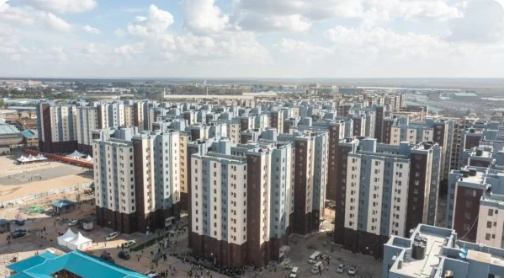
Affordable housing is another major test. The PBO expects about 45,000 housing units to be completed by December 2026, with a further 15,000 expected by June 2027.
But construction numbers alone do not establish whether the programme is meeting the needs of low-income households. The report identifies concerns around affordability, allocation, delayed payments and unoccupied units.
It also notes that applicants sometimes select houses beyond available capacity, leaving unsuccessful allocations. The PBO recommends stronger financial assessment and better targeting of Tenant Purchase Schemes and deposit assistance towards social housing beneficiaries earning below Ksh20,000 a month.
The Government should therefore publish clear figures showing completed units, occupied homes, prices, beneficiaries’ incomes and the number of households that can realistically afford the repayment terms.
Healthcare presents a separate financing risk. Under the Kenya–United States Health Cooperation Framework, Kenya’s additional domestic health spending commitment rises to Ksh20 billion in FY2027/28, relative to the 2025 baseline.
At the same time, United States funding for frontline healthcare workers is scheduled to end, leaving Kenya responsible for financing 13,293 full-time equivalent positions. The PBO warns that failure to meet agreed co-investment commitments could affect external financing.
This is not simply a budgetary detail. It is a question of whether the Government can sustain essential health services as external support changes.
The SONA scorecard
The PBO’s budget options also expose the limits of what can be achieved through new spending alone. Its quantified new options total Ksh9.85 billion for FY2027/28, comprising Ksh2 billion for research and innovation and Ksh7.85 billion for workforce measures.
That amount is only about 0.19 per cent of the projected Ksh5.303 trillion budget. It is not the entire development budget, and the report says several other proposals are assumed to be budget-neutral because their costs are not quantified.
The distinction matters: the figure should not be mistaken for the total value of the Government’s development agenda. But it does underline the PBO’s emphasis on improving efficiency within existing resources.
The report’s alternative scenario offers only a modest improvement: average medium-term growth of 5.0 per cent, compared with 4.8 per cent under the baseline, while the FY2027/28 deficit falls from 6.2 to 6.0 per cent of GDP.
Ruto’s address should answer five questions: How will the Government reduce the burden of debt interest? What measurable interventions will raise productivity? How many sustainable jobs have been created? Can low-income households afford the homes being built? And how will Kenya finance healthcare as external support changes?
The PBO does not conclude that the Government’s programmes have failed. It does, however, identify economic constraints that cannot be answered with slogans.
For millions of Kenyans facing the cost of living, unemployment and pressure on public services, the test of the State of the Nation Address will be whether it offers credible answers, measurable targets and a clear account of delivery.
The central question is no longer how ambitious the transformation agenda sounds. It is whether the country has the fiscal room, productive capacity and implementation record to deliver it.