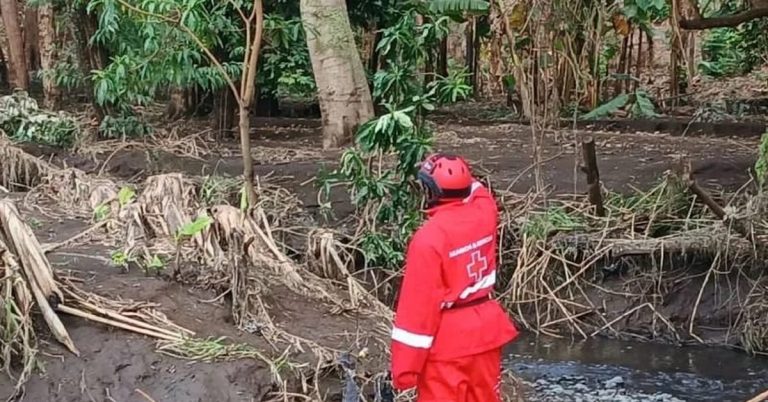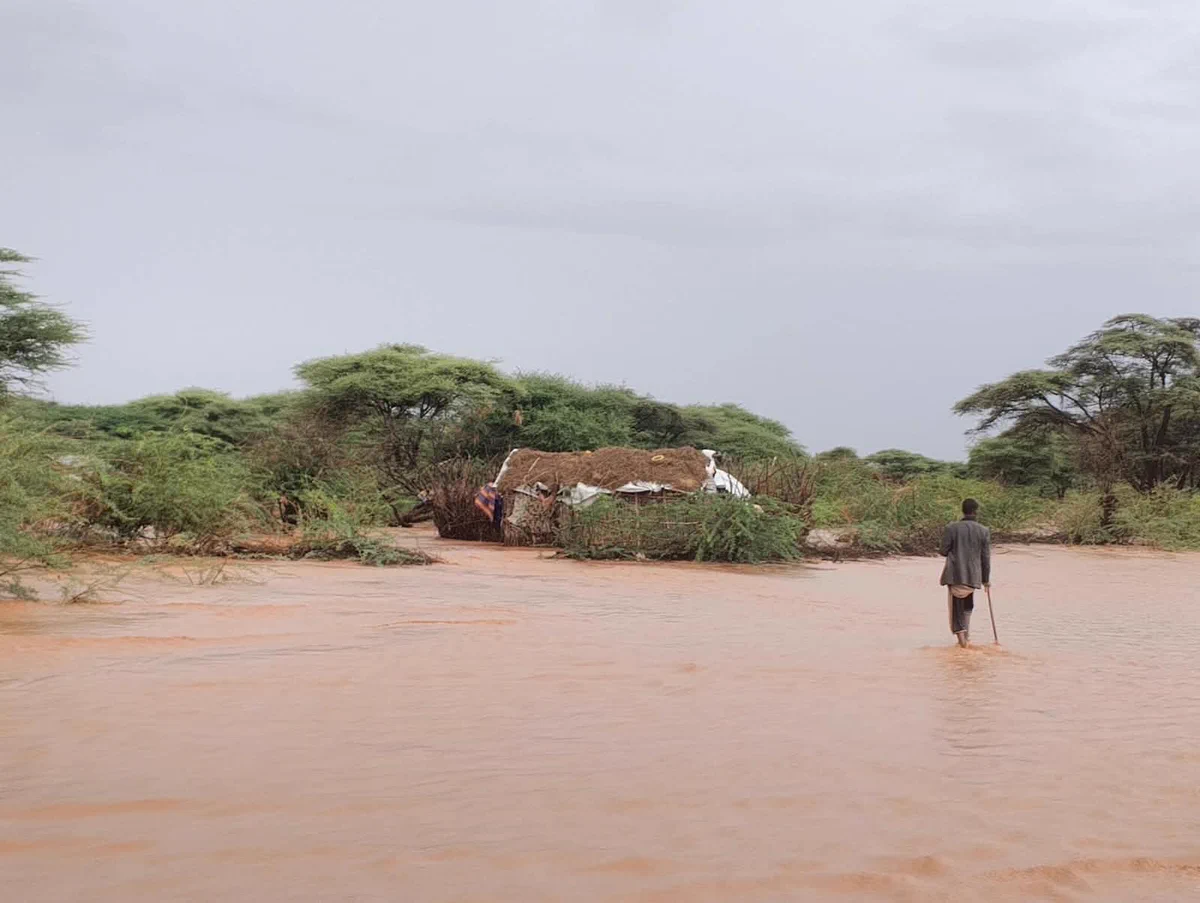
More than 300 households have been displaced and approximately 400 livestock lost following heavy rains in Tana North, Tana River County, prompting the Kenya Red Cross Society to step up emergency relief operations for affected communities.
The disaster has left families facing displacement, loss of shelter and destruction of their livelihoods, with pastoralist households particularly affected by the loss of livestock, a critical source of income and food security.
In an update on its humanitarian response on Tuesday, November 17, 2026, Kenya Red Cross said its emergency teams had reached 164 households with essential relief supplies despite difficult road conditions that disrupted the delivery of assistance.
The organisation revealed that a relief truck transporting supplies became stuck in mud while responders were travelling to affected communities.
“Our relief truck got stuck in the mud on the way, but our team pushed on to reach 164 households with essential items,” Kenya Red Cross said.
Despite the challenging terrain, the team managed to deliver assistance to the 164 households, as humanitarian operations continued in areas affected by the heavy rains.
The organisation also announced a further distribution targeting 102 households in Kono Ramadha, expanding its ongoing response to families struggling with the impact of the disaster.
“Today, we are reaching 102 more households in Kono Ramadha,” the organisation said.
The two reported distributions represent assistance reaching or targeting a combined 266 households, although the organisation has not indicated whether all the households in the second distribution have already received the supplies.
Family loses more than 300 livestock
Among the families severely affected by the heavy rains is that of Mzee Bodole, whose household lost more than 300 livestock near Diid village in Tana North.
The loss represents a devastating economic setback for the family, given the importance of livestock to pastoralist communities, where animals provide income, food and a vital financial safety net.
During a visit to the family, Kenya Red Cross responders provided psychosocial support and shelter items to help them cope with the effects of the disaster.
“Near Diid village, we visited Mzee Bodole, whose family lost over 300 livestock, and offered psychosocial support and shelter items,” the organisation said.
The intervention highlights the humanitarian consequences of the heavy rains, which extend beyond displacement to include the destruction of livelihoods and the emotional distress experienced by families who have lost valuable assets.
For pastoralist households, losing hundreds of animals can undermine years of investment and leave families struggling to meet basic needs long after the rains subside.
Kenya Red Cross continues emergency response
The latest intervention comes as affected communities in Tana North face the combined challenges of displacement, livestock losses and difficult access to essential assistance.
The muddy roads encountered by relief teams illustrate the logistical difficulties of reaching remote communities during periods of heavy rainfall, potentially complicating the delivery of emergency supplies to vulnerable households.
Kenya Red Cross is providing essential relief items, shelter assistance and psychosocial support as part of its response to the affected families.
However, with more than 300 households displaced and approximately 400 livestock lost, the scale of the reported impact points to significant recovery needs beyond immediate emergency assistance.
Support for affected households will be important in helping families restore their livelihoods, secure shelter and rebuild their resilience following the disaster.
The organisation’s continuing relief operations in Kono Ramadha and other affected communities are aimed at ensuring that families bearing the brunt of the heavy rains receive assistance during the humanitarian response.