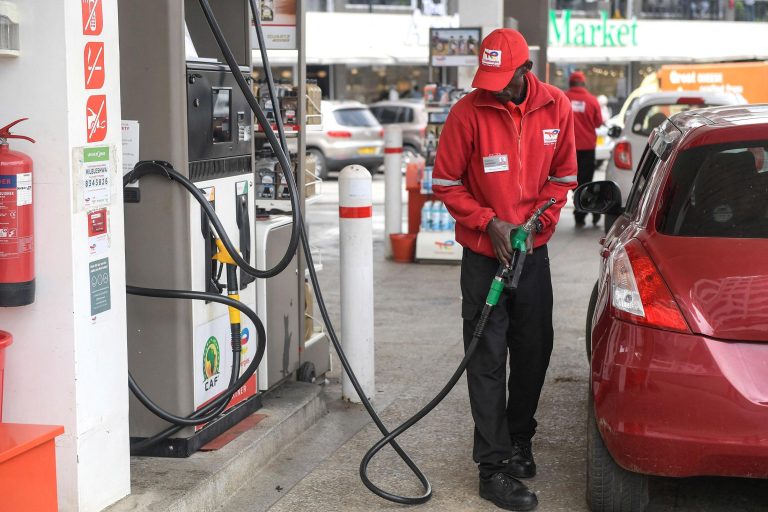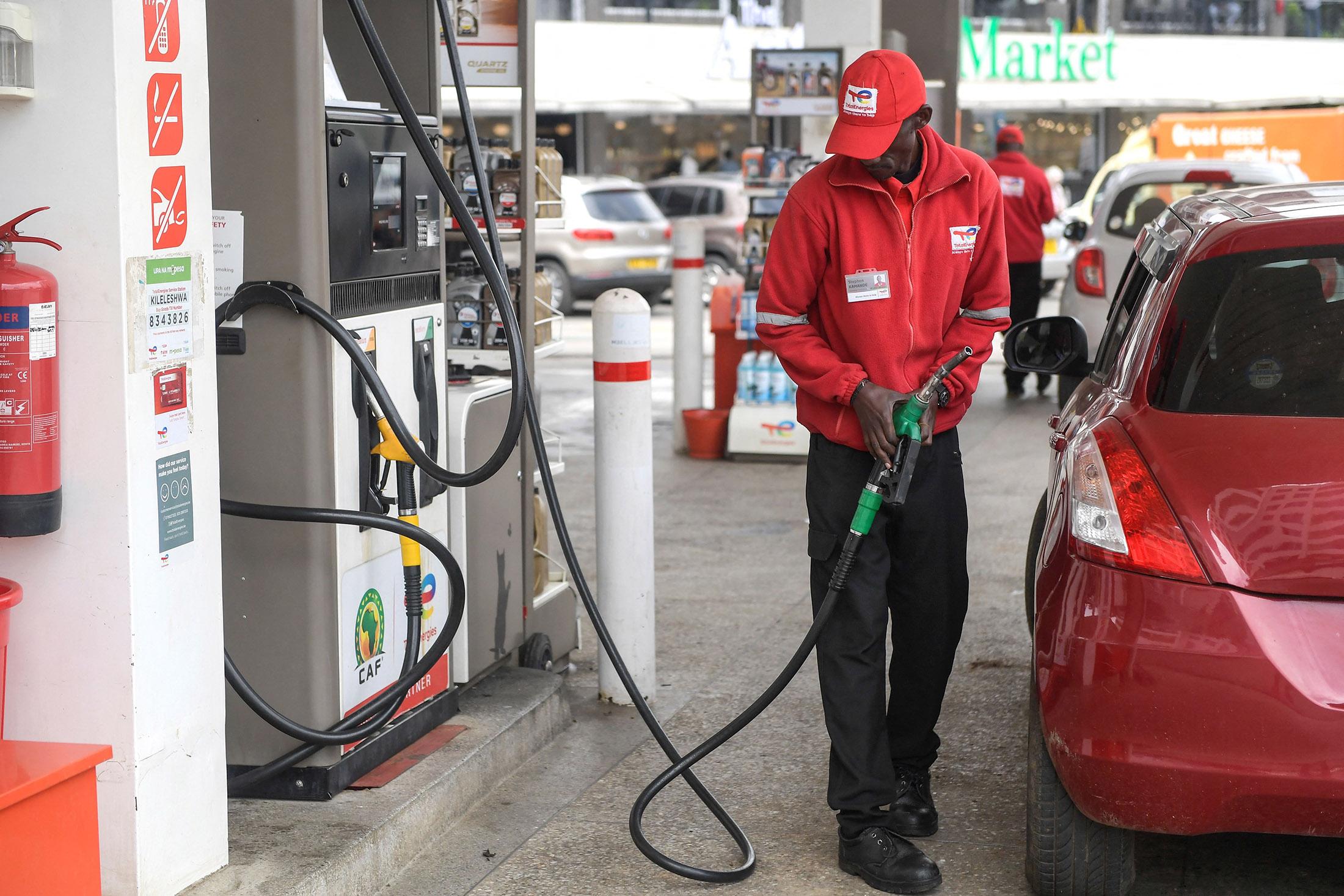
Motorists across Kenya will continue paying varying prices for petrol, diesel and kerosene following the latest review by the Energy and Petroleum Regulatory Authority (EPRA) for the November-December 2026 pricing period.
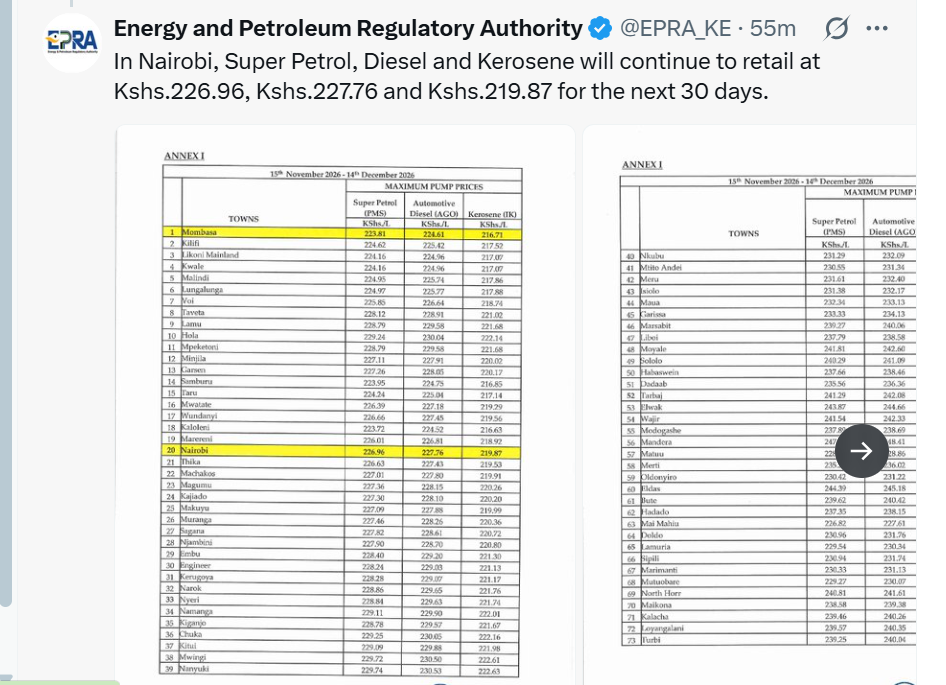
In Nairobi, a litre of Super Petrol will retail at Ksh226.96, while diesel will cost Ksh227.76 and kerosene Ksh219.87.
In a notice issued on Saturday, November 14, 2026, the regulator announced that the prices would remain unchanged from November 15 to December 14, maintaining the rates that applied during the previous pricing cycle.
In Mombasa, where imported petroleum products enter the country, Super Petrol will retail at Ksh223.81 per litre, diesel at Ksh224.61 and kerosene at Ksh216.71.
The revised schedule takes effect at midnight on Saturday, November 15.
Fuel prices in major towns
The regulator’s pricing schedule indicates differences in fuel costs across the country, with motorists in some inland and northern regions paying significantly more than those in coastal areas.
In Kisumu, a litre of petrol will retail at Ksh226.51, diesel at Ksh227.71 and kerosene at Ksh216.83.
Motorists in Nakuru will pay Ksh225.73 for petrol, Ksh226.93 for diesel and Ksh219.06 for kerosene.
In Kakamega, the prices will stand at Ksh226.25 for petrol, Ksh227.45 for diesel and Ksh219.57 for kerosene.
Further down the coast, Kilifi residents will pay Ksh224.62 for petrol, Ksh225.42 for diesel and Ksh217.52 for kerosene.
Mandera records the highest prices in the published schedule, with Super Petrol retailing at Ksh247.62 per litre, diesel at Ksh248.41 and kerosene at Ksh240.52.
Other northern markets will also experience relatively high prices. In Eldas, petrol will retail at Ksh244.39 and diesel at Ksh245.18, while Elwak will record Ksh243.87 for petrol and Ksh244.66 for diesel.
In Moyale, motorists will pay Ksh241.81 for petrol and Ksh242.60 for diesel. Wajir will have petrol at Ksh241.54 and diesel at Ksh242.33.
Implications for transport operators and households
The decision to maintain fuel prices means transport operators and businesses will continue operating under the same fuel cost conditions experienced during the previous pricing period.
Public service vehicles, including matatus and buses, rely heavily on diesel, while taxis and private motorists largely depend on petrol.
The unchanged prices could therefore provide some predictability for transport businesses, although operators will continue facing pressure from existing fuel expenses and other operational costs.
For households, kerosene prices will also remain unchanged, with Nairobi residents continuing to pay Ksh219.87 per litre.
Kerosene remains an important source of cooking and lighting fuel for some households, particularly those that do not have access to alternative energy sources.
However, maintaining the current pump prices does not automatically translate into lower transport fares or reduced prices of consumer goods, as these are influenced by several other operating and distribution costs.
Why fuel prices vary across the country
The differences in pump prices across Kenya are largely influenced by transportation and distribution expenses.
Mombasa generally records lower prices because of its proximity to the country’s main petroleum import facilities and distribution infrastructure.
Fuel transported to inland and remote destinations attracts additional logistical costs, contributing to higher retail prices in areas such as Mandera, Wajir and Moyale.
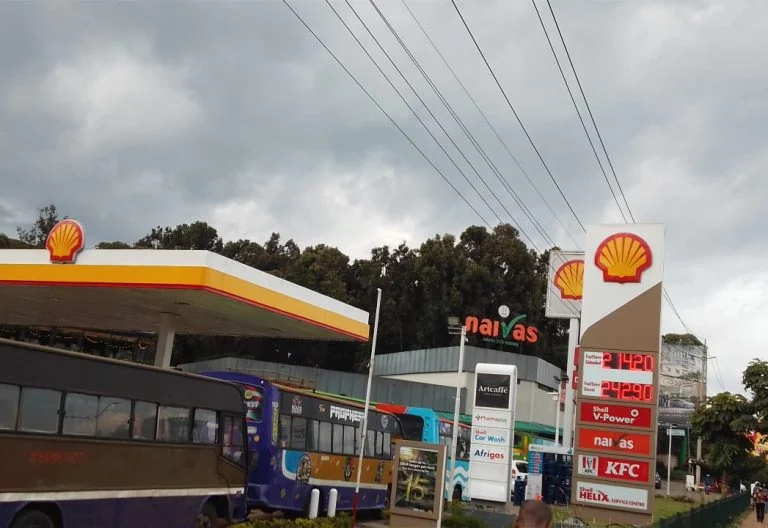
EPRA determines the maximum retail prices by taking into account the landed cost of imported petroleum products, applicable taxes, distribution costs and other components of the petroleum pricing formula.
Oil marketing companies are required to observe the prescribed maximum prices and cannot legally sell petroleum products above the regulator’s approved rates.
The November 15 to December 14 pricing schedule will remain in force for 30 days, after which EPRA is expected to announce the next monthly review.