
Health Cabinet Secretary Aden Duale has ruled out detaining travellers in Kenya to meet quarantine requirements imposed by foreign governments, saying the country will not act as a holding facility for international travel restrictions.
Duale said Kenya would not issue quarantine or Ebola-free certificates to travellers seeking to meet entry conditions set by other countries, arguing that such demands were not provided for under international health regulations.
Speaking during a press briefing on Wednesday, November 11, 2026, the CS announced that Kenya would begin a 42-day countdown towards declaring the Bundibugyo Ebola outbreak over on Thursday, November 12.
The countdown follows the discharge of the last patient who had been receiving treatment for the disease. Kenya is expected to be declared Ebola-free on or around December 23, provided no new infections are detected.
“Kenya will not serve as a quarantine destination for other jurisdictions,” Duale stated.
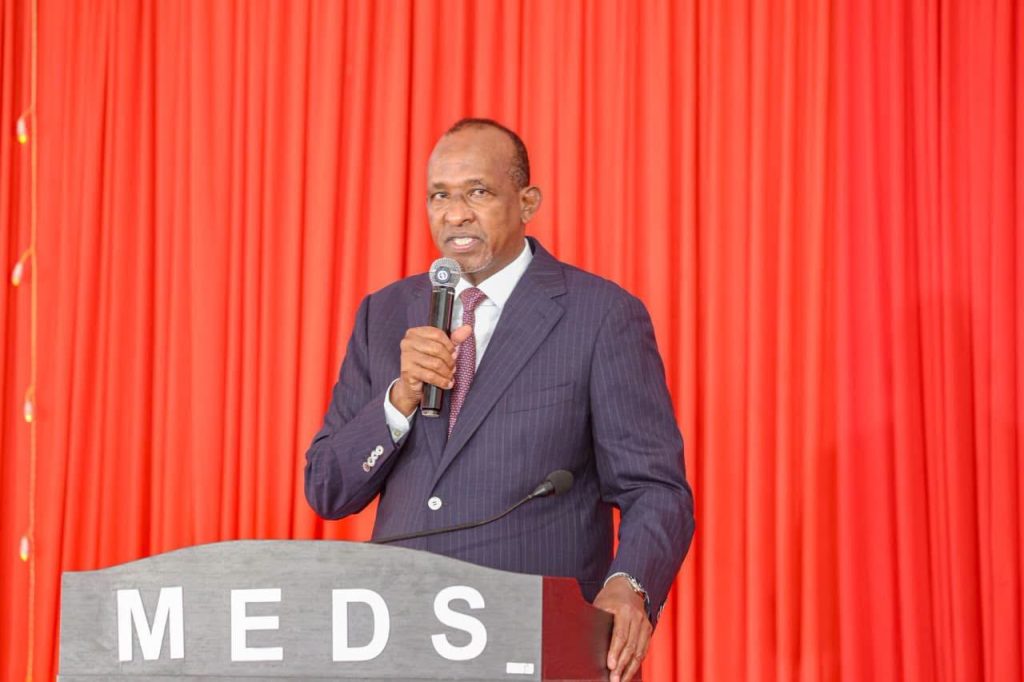
He maintained that the Ministry of Health would not hold passengers in the country to satisfy health requirements imposed by foreign destinations.
“Such requirements have no basis in the International Health Regulations,” he added.
The CS’s remarks come amid diplomatic disagreements between Kenya and some foreign governments over travel restrictions introduced following the Ebola outbreak.
On October 30, Saudi Arabia suspended travel by its citizens to Kenya, halted visa issuance to travellers from the country and barred entry to passengers arriving directly from Kenya.
The restrictions also affect travellers who have transited through other countries but spent time in Kenya or another nation experiencing an active Ebola outbreak within the previous 21 days.
The measures sparked concerns over the movement of Kenyan workers, businesspeople and other travellers heading to the Gulf nation.
Kenya criticised the decision, describing the restrictions as disproportionate to the country’s Ebola situation.
The Africa Centres for Disease Control and Prevention (Africa CDC) subsequently urged Saudi Arabia to reconsider its position, arguing that countries should not face punitive measures for identifying and transparently reporting disease outbreaks.
The World Health Organization (WHO), in its November 6 update, also advised against imposing travel and trade restrictions on countries responding to the outbreak.
Duale called on countries that had introduced restrictions against Kenya to review their decisions, insisting that the government had complied with international public health standards.
“Kenya remains open for business, tourism, trade and travel, with no restrictions on movement or public gatherings,” he said.
Kenya confirms nine Ebola infections
The country recorded nine confirmed infections, all linked to a single transmission cluster originating from the imported index case.

Two patients died, while seven others recovered.
According to the Ministry of Health, all 135 contacts linked to the initial case were successfully traced and monitored.
The final 11 contacts completed their mandatory 21-day monitoring period and were released in good health.
The government said there had been no evidence of community transmission, with all infections remaining within the original cluster.
Kenya also declared Ebola a formidable epidemic disease and gazetted the Public Health (Ebola Disease) Rules to establish a legal framework for managing the outbreak.