Kenya’s Directorate of Criminal Investigations (DCI) has announced a major breakthrough in the war against drug trafficking after recovering 454 kilogrammes of suspected methamphetamine worth approximately Ksh3.6 billion in Kwale County.
The intelligence-led operation also resulted in the arrest of three suspects, including a suspected drug trafficking kingpin wanted by authorities in Kenya and Tanzania.
In a statement dated November 9, 2026, DCI Director Mohamed I. Amin identified the first two suspects as Basleman Saleh Khamis and Nakabugo Zuraicah, a 37-year-old Ugandan woman.
The two were arrested on November 7 in Shirazi village, Kwale County, by a multi-agency team led by detectives from the National Anti-Narcotics Investigations Bureau (NANIB).
Khamis is described by the DCI as a notorious drug baron wanted for narcotics trafficking in both Kenya and Tanzania.
But the arrests were only the beginning of a wider investigation that would uncover one of the country’s latest major suspected methamphetamine consignments.
Ksh3.6 billion discovery
Following additional leads, detectives moved to Ganja la Simba Village in Kinondo, where a targeted search uncovered 454 kilogrammes of suspected methamphetamine.
The operation led to the arrest of a third suspect, Hamad Seif Said, a 54-year-old Tanzanian national.
According to Amin, the recovered drugs have an estimated street value of Ksh3.6 billion.
Detectives also seized two motor vehicles and a motorcycle believed to be connected to the investigation.
The recovered vehicles were a white Ford station wagon, registration number KDY 626Z, and a white Ford pickup, registration number KDZ 201A. A red TVS motorcycle, registration number KMGT 230A, was also impounded.
“The investigative trail did not end there,” Amin said, explaining how detectives pursued additional intelligence that led them to the Kinondo discovery.
The three suspects remain in custody as investigations continue to establish the full extent of the alleged trafficking network and identify possible accomplices.

Kenya-Tanzania cooperation
The DCI credited intelligence sharing between Kenyan and Tanzanian security agencies for helping detectives track down the suspects and locate the suspected narcotics.
Amin described the operation as evidence of the growing effectiveness of regional cooperation against organised drug trafficking.
“The seamless real-time exchange of intelligence and the joint operational follow-up that led to this recovery are clear evidence of the strength of this regional cooperation,” he stated.
The Kwale breakthrough comes after another major methamphetamine seizure involving the vessel MV Mashaallah in the Indian Ocean.
Authorities recovered 1,036 kilogrammes of methamphetamine from the vessel, with an estimated value of Ksh8.2 billion.
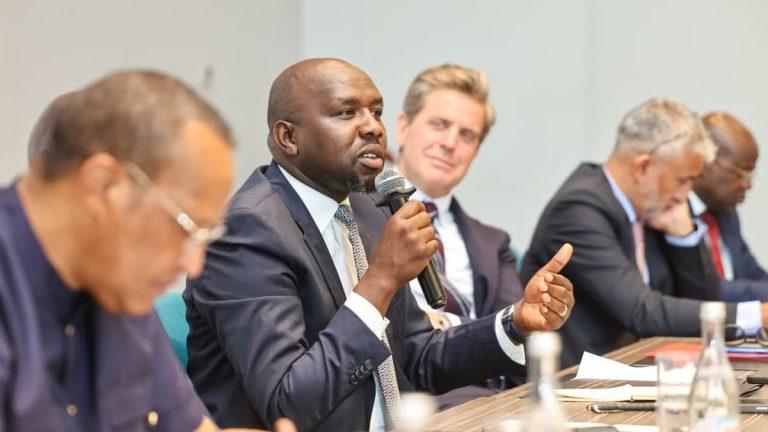
The drugs were destroyed on September 24, 2026, at Bamburi Cement Factory in Mombasa under the supervision of Interior Cabinet Secretary Kipchumba Murkomen.
The exercise brought together representatives from the Judiciary, the Office of the Director of Public Prosecutions (ODPP), the Government Chemist, security agencies and the Kenya Navy, among other stakeholders.
1,631 suspects arrested
The DCI also disclosed the scale of its wider anti-narcotics operations between January and October 2026, revealing that detectives recovered more than 21 tonnes of cannabis alongside other illicit substances.
The recoveries included 21,005.54 kilogrammes of cannabis valued at Ksh630,166,200, 10.23 kilogrammes of cocaine worth Ksh40,920,000 and 7.74 kilogrammes of heroin valued at Ksh23,220,000.
Other seizures included 7.67 kilogrammes of methamphetamine worth Ksh61,352,000 and 4.8 kilogrammes of amphetamine valued at Ksh24 million.
The combined estimated value of these recoveries was Ksh779,658,200.
A total of 1,631 suspects were arrested during the same period.
The agency also highlighted successful prosecutions, including an Iten case in which a convicted drug trafficker was sentenced to pay a Ksh24 million fine or serve 10 years in prison for trafficking 266.2 kilogrammes of cannabis.
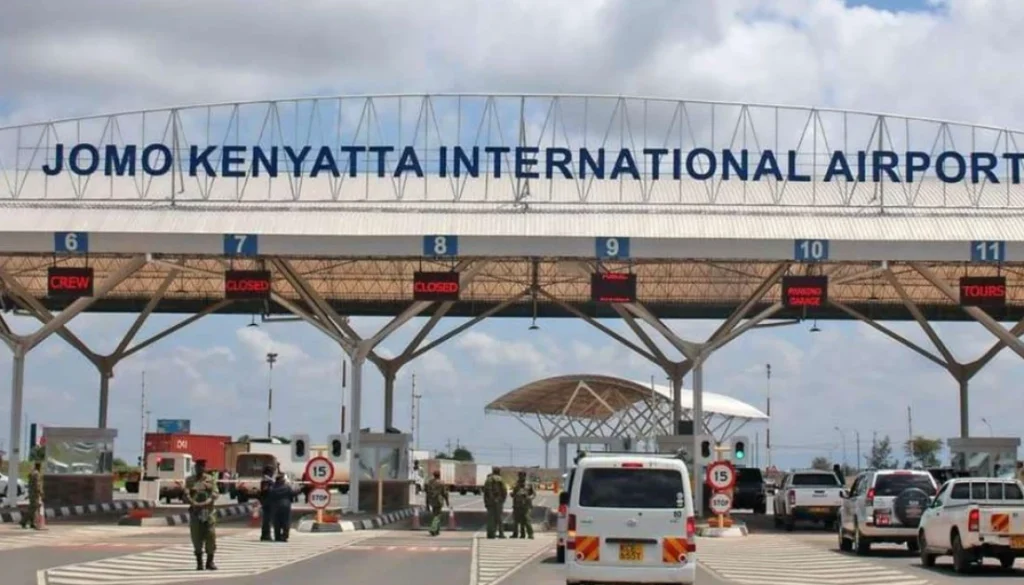
In a separate case, the High Court upheld sentences imposed on three individuals convicted by the JKIA court in 2025 for trafficking 871.8 kilogrammes of cannabis.
DCI targets drug financiers
Beyond arresting suspects and intercepting narcotics, the government is intensifying efforts to dismantle the financial networks behind drug trafficking.
Amin revealed that NANIB was working with the Asset Recovery Agency and other institutions to identify and trace proceeds of crime, including cash, vehicles, houses, land and businesses.
The strategy targets the financiers and organisers who sustain trafficking syndicates rather than focusing exclusively on couriers.
“Our focus is not only on apprehending couriers but also on identifying and pursuing the financiers and organisers who sustain these criminal enterprises,” Amin said.
The intensified crackdown follows the government’s decision to make the fight against narcotics and illicit alcohol a national security priority, as highlighted by President William Ruto in his 2026 New Year Address.
The former Anti-Narcotics Unit has since been transformed into the National Anti-Narcotics Investigations Bureau.
In April 2026, NANIB recruited 208 officers from the Kenya Police Service and Administration Police Service. It has also established 40 additional stations and trained 314 officers in anti-narcotics investigations.
Amin maintained that Kenya would not become a transit route, destination market or safe haven for international drug traffickers.
“Kenya will not be allowed to serve as a transit route, a destination market or a safe haven for drug traffickers,” he declared.
The DCI has urged members of the public to report suspected narcotics trafficking activities to law enforcement agencies as detectives pursue the wider network behind the Ksh3.6 billion Kwale seizure.