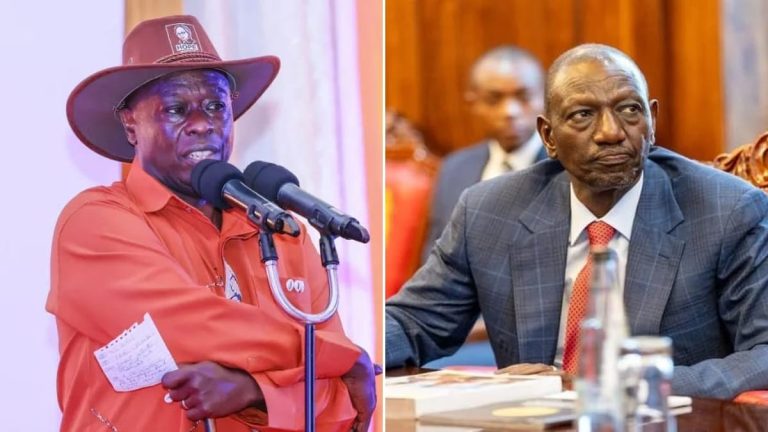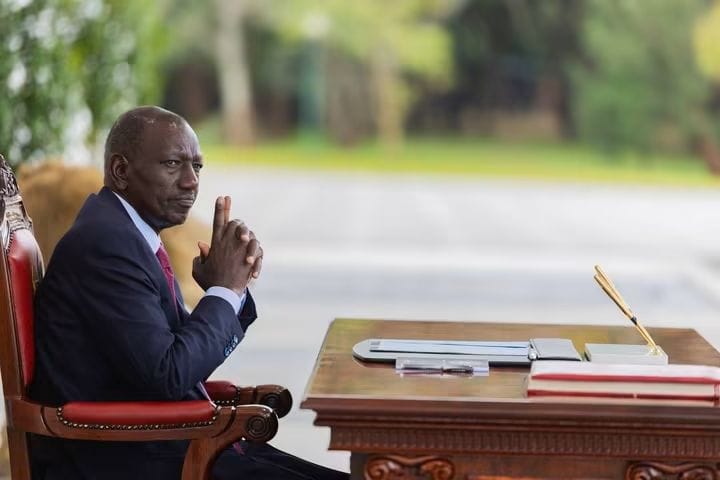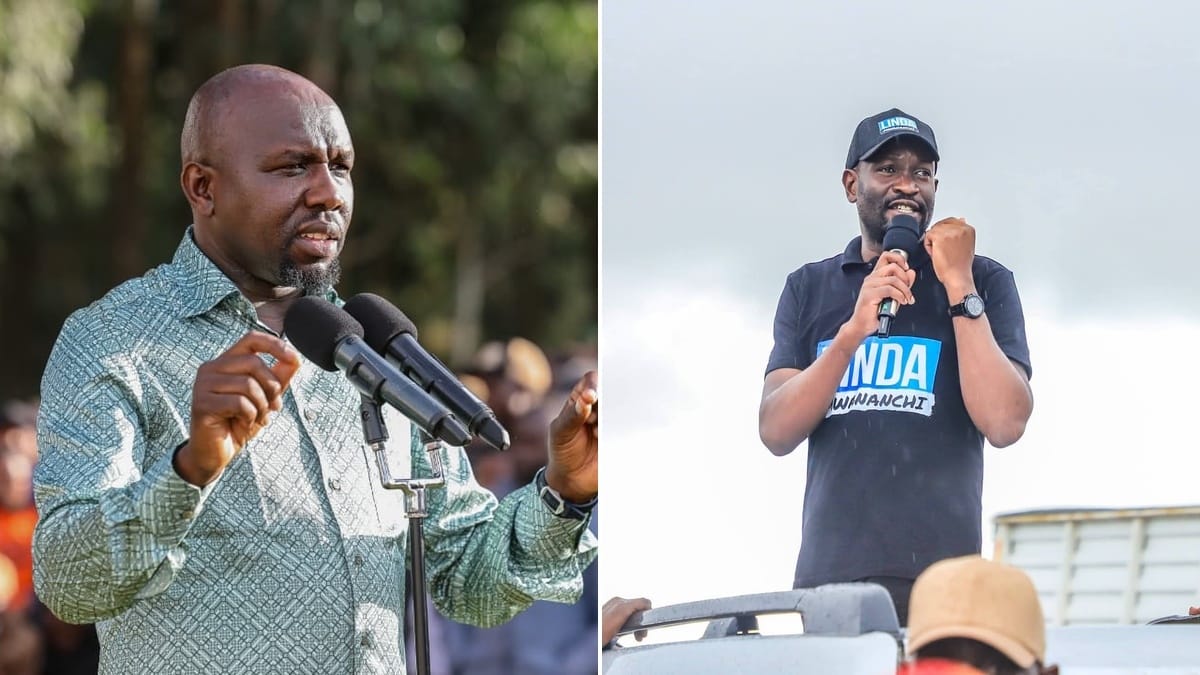
Interior Cabinet Secretary Kipchumba Murkomen has urged Nairobi Senator Edwin Sifuna to abandon a possible 2027 presidential bid and support William Ruto’s re-election, arguing that the Luhya community could position itself for a stronger shot at State House in 2032.
Murkomen wants the Nairobi senator and other leaders from the Luhya community to rally behind Ruto’s re-election campaign, arguing that doing so could allow the region to negotiate for the presidency when the country heads to another election in 2032.
The CS made the remarks on Sunday during a thanksgiving church service and fundraising event at Bushiangala Church of God in Ikolomani Constituency, Kakamega County.
Directly addressing Sifuna’s growing political ambitions, Murkomen argued that challenging Ruto in 2027 would be an uphill task and could weaken the Luhya community’s chances of securing the country’s top leadership position in the next succession cycle.
“The President is our neighbour just next door. There’s no need to divide votes, and you can’t win. Support the President for the next five years. You and I will make arrangements in the coming years,” Murkomen said.
His message was a political appeal to Sifuna to prioritise a possible 2032 presidential opportunity over an immediate confrontation with Ruto.
Why Murkomen wants Sifuna to wait until 2032
Murkomen argued that the Luhya community had supported Ruto over the years and should not abandon the President at a time when its political influence could translate into greater bargaining power.
He suggested that maintaining the relationship with the Head of State through the 2027 election could create an opportunity for the community to negotiate for the presidency after Ruto’s second term, should he secure re-election.
The Cabinet Secretary also accused sections of the political establishment of repeatedly persuading Luhya leaders to abandon promising political alliances just when they appeared close to gaining national influence.
“You people of Kakamega, every time you build your leader, when they’re about to capture the presidency, you are deceived and told, ‘Let’s go this way to demolish’,” he said.
Murkomen maintained that the community had already invested considerable political support in Ruto and should not start rebuilding its national political influence from scratch.
“You have built him. He has worked and he’s about to finish, but you’re being told to cut ties with him and start afresh with someone else who’s far back on the queue,” he added.
His argument effectively presents continued cooperation with Ruto as a possible route for the Luhya community to strengthen its position in the 2032 presidential succession.
However, the proposal remains Murkomen’s political appeal, with no indication in his remarks that Sifuna has accepted the suggested arrangement.
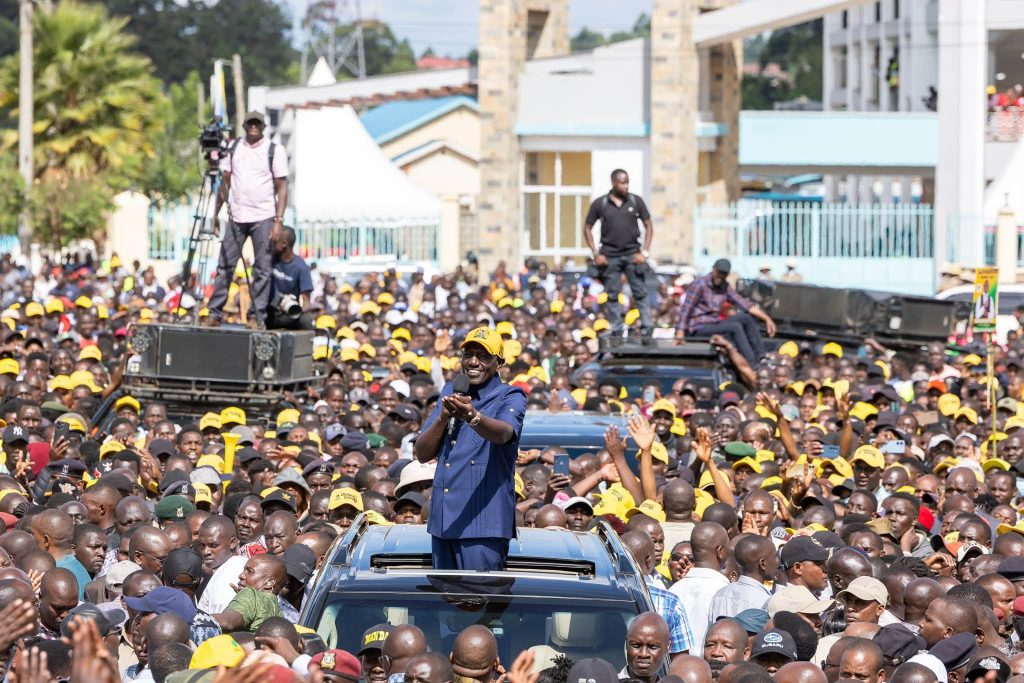
Sifuna’s 2027 presidential ambitions put him at the centre of the debate
Murkomen’s intervention comes as Sifuna’s political profile continues to rise following his differences with ODM’s top leadership over the party’s decision to support Ruto’s re-election bid.
The outspoken Nairobi senator has increasingly positioned himself as a potential contender for the United Opposition’s presidential ticket in 2027, as coalition leaders continue navigating the difficult process of settling on a single candidate.
His growing prominence has attracted considerable admiration, particularly among young Kenyans, who have increasingly viewed him as a significant voice in the country’s political debate.
Sifuna’s emergence has also introduced another layer of competition into the opposition’s presidential calculations, with established politicians now having to contend with a younger political figure seeking a place at the national leadership table.
For Murkomen, however, the senator’s growing popularity should not be confused with an immediate path to State House.
The Cabinet Secretary acknowledged Sifuna’s appeal but argued that attempting to unseat Ruto in 2027 could undermine the Luhya community’s broader political interests.
His intervention also places Sifuna in a difficult political position: pursue a possible presidential challenge in 2027 or consider a longer-term strategy that could give his community a greater role in the 2032 succession contest.

Murkomen warns against breaking Ruto alliance
The Interior CS further dismissed the political strategy of confronting Ruto before his second-term ambitions are settled, arguing that emerging leaders should instead prepare for the next phase of national leadership.
He suggested that opposition politicians were making a political miscalculation by focusing on removing the incumbent instead of positioning themselves to benefit from the eventual succession process.
“Huyu Rais mwenye ako hapa tumalizane na yeye, asonge aondoe jam, sisi sasa tupangane hapa tukitafuta uongozi kusonga mbele.”
The remarks underline the growing importance of the 2032 succession debate, even as political parties and coalitions remain focused on the immediate battle for the 2027 presidency.
If Ruto wins re-election, he would be serving his final constitutionally permitted term, making the 2032 contest a major opportunity for politicians seeking to shape the country’s next leadership.
For Sifuna, Murkomen’s proposal raises a bigger question about political timing, regional bargaining power and whether emerging leaders should pursue immediate presidential ambitions or build alliances for a future succession contest.