Three years after his wife and six children disappeared into Shakahola Forest, Stephen Mwiti is still waiting to bury his family.
He has preserved a handful of faded photographs and neatly folded school uniforms, hoping that forensic investigators will eventually identify the remains of his loved ones and allow him to give them a dignified burial.
His wait continues despite a landmark court ruling on November 6, 2026, sentencing doomsday cult leader Paul Nthenge Mackenzie to 200 years in prison for his role in the Shakahola massacre.
Mackenzie and 28 co-defendants were convicted over the deaths of 191 people, most of them children, who prosecutors said were starved, strangled or suffocated in the forest in Kilifi County.
But while the sentence marks a significant milestone in the pursuit of justice, hundreds of grieving families remain without answers about the whereabouts of their relatives.
With fewer than 50 victims identified through DNA testing among the recovered remains, families are now racing against a December 2026 deadline for the planned mass burial of 443 unclaimed bodies and 45 body parts.
The proposed disposal has intensified calls for the government to complete identification efforts and preserve DNA evidence before the remains are permanently interred.
Justice without closure
For bereaved families, Mackenzie’s lengthy prison sentence offers little consolation while their loved ones remain unidentified.
Justice Diana Kavedza Mochache declined to impose the death penalty, describing the killings as “cold and calculated”. The court heard that 183 of the 191 victims covered in the murder case died from complete starvation.
For Mwiti, the conviction does not erase the pain of losing his wife and six children, who entered the forest in 2022. He has managed to bury only one of his sons, Samuel, whose grave is marked by a simple wooden cross.
Other families share his frustration over the tragedy and the authorities’ failure to intervene before more lives were lost.
Francis Wanje, a 62-year-old teacher who lost two grandchildren and helped rescue another, expressed anger over what he considers the government’s delayed response.
“Nothing can ease the pain,” Wanje told reporters after the sentencing.
“I really have great anger towards the authorities. If they had taken action, we would not be here today.”

December burial deadline
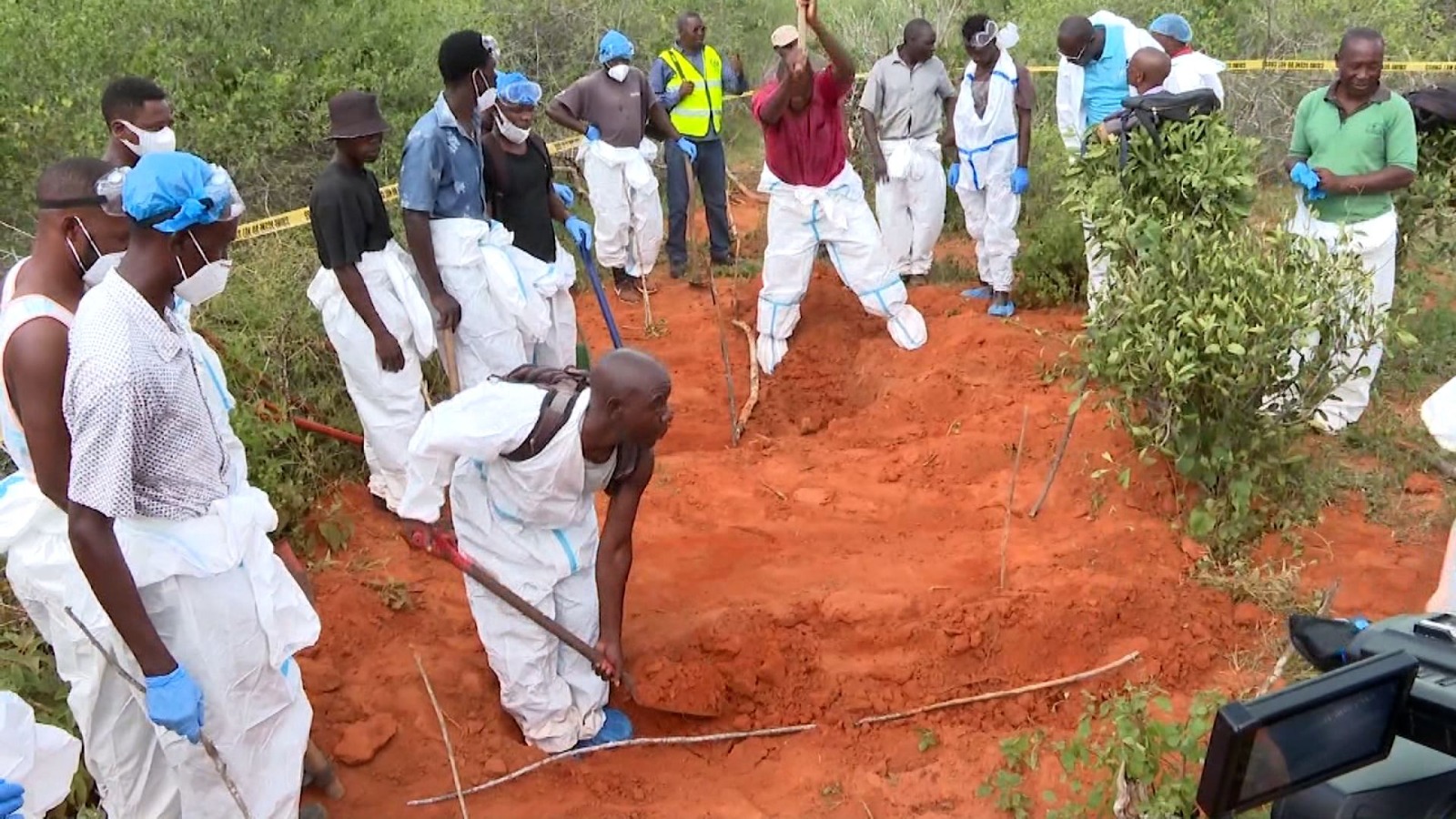
The 191 murder convictions represent only part of the wider Shakahola tragedy, in which more than 450 bodies were recovered during multi-agency exhumations.
Separate proceedings involving Mackenzie and his associates include charges relating to terrorism, radicalisation, manslaughter and child torture, with further court battles expected to continue into 2027.
Investigations have also extended beyond the original Shakahola site.
In late 2025, detectives discovered 27 suspected mass graves in the neighbouring Kwa Binzaro area, approximately two kilometres from Shakahola Forest. Investigators subsequently recovered 53 bodies and 44 body parts from the area.
Meanwhile, the Malindi Sub-County Hospital Mortuary is struggling to accommodate the recovered remains.
In September 2026, Kilifi County issued a 21-day public notice asking families to claim their missing relatives ahead of the planned December disposal.
County Health Executive Peter Mwarogo said the refrigerated containers holding more than 440 remains had overwhelmed the facility, which was originally designed to accommodate approximately 25 bodies.
Some of the recovered remains consist of partial skeletal fragments, making identification particularly difficult.
The county says the proposed burial is necessary to address the growing pressure on mortuary facilities, but families fear the process could further complicate efforts to establish the identities of their relatives.

Families demand DNA
The biggest obstacle remains the identification process.
Degraded biological samples, the high cost of forensic investigations and funding constraints at the Government Chemist have slowed DNA matching.
Available figures indicate that approximately 30 Shakahola victims and 14 Kwa Binzaro victims have been positively matched with their relatives, leaving hundreds of remains unidentified.
For families, the prospect of a mass burial before identification is complete has triggered renewed demands for the government to preserve genetic evidence.
Matrona Mangoji, who lost eight family members in the tragedy, is among those calling for authorities to safeguard DNA profiles before proceeding with the planned interment.
She said many families, particularly those living in Western Kenya and Nyanza, may not have received official public notices requesting them to claim their relatives.
“We cannot bury our people like strangers when the government still holds the power to tell us who is who,” Mangoji said during a gathering of victims’ families in Kilifi.
“Once they go into a mass grave without answers, our grief becomes permanent.”
The families want the government to ensure that unidentified remains can still be subjected to DNA testing and matched with relatives even after burial.
Hope beyond burial
The dispute attracted national attention in October 2026 when senators visited the Malindi mortuary and called for greater public awareness before any mass burial takes place.
Following the concerns, county officials pledged that the proposed burial site near Shakahola Forest would have individually mapped graves and permanent identification markers.
The arrangement is intended to allow future exhumations should additional DNA matches emerge.
Meanwhile, investigators and Government Chief Pathologist Dr Richard Njoroge have continued releasing identified remains to families in small batches.
In mid-October, eight Kwa Binzaro victims were handed over to relatives from Homa Bay, Busia and Migori counties, allowing the families to arrange burials.
Dr Njoroge said 14 bodies had been matched with their biological relatives and that the government was providing free transportation to facilitate dignified burials.
“We have matched 14 bodies to their living biological relatives, and the government is providing free transportation to facilitate dignified burials,” he said during the handover in Malindi.
“We continue to appeal to any family with missing relatives to come forward and provide DNA samples before the window closes.”
For Mwiti, however, the search remains painfully personal.
Each passing week brings the December deadline closer, while he continues to hope that investigators will finally establish the identities of his remaining five children.
The 200-year sentence may have brought a measure of accountability for the Shakahola killings, but for families still waiting to bury their loved ones, justice remains incomplete.